
In The Media
There is No Anger Like That of a Woman Review
Small Change Substack by Doreen Nicoll
What happens when a banker walks into a brothel and pays for an hour with the most expensive woman? That’s not the opening line of a joke, it’s exactly what unfolds during this 50-minute production written by Delamere.
Eve, short for Genevieve, is not your usual sex worker — but then again, is there even such a thing? She’s educated, articulate, well read and in control of her body.
Adam, on the other hand, is what exactly what he appears to be — an ambitious young banker successfully scaling the corporate ladder. But Adam’s unable to find meaningful intimacy and his mentor thinks a wife would help his brand.
What unfolds is an important conversation of the sexes with Eve critically questioning the limited, and limiting, roles our patriarchal society has laid out for women; the misogynous systems that keep women in their place; and the fact that all roads eventually lead to women being baby making machines.
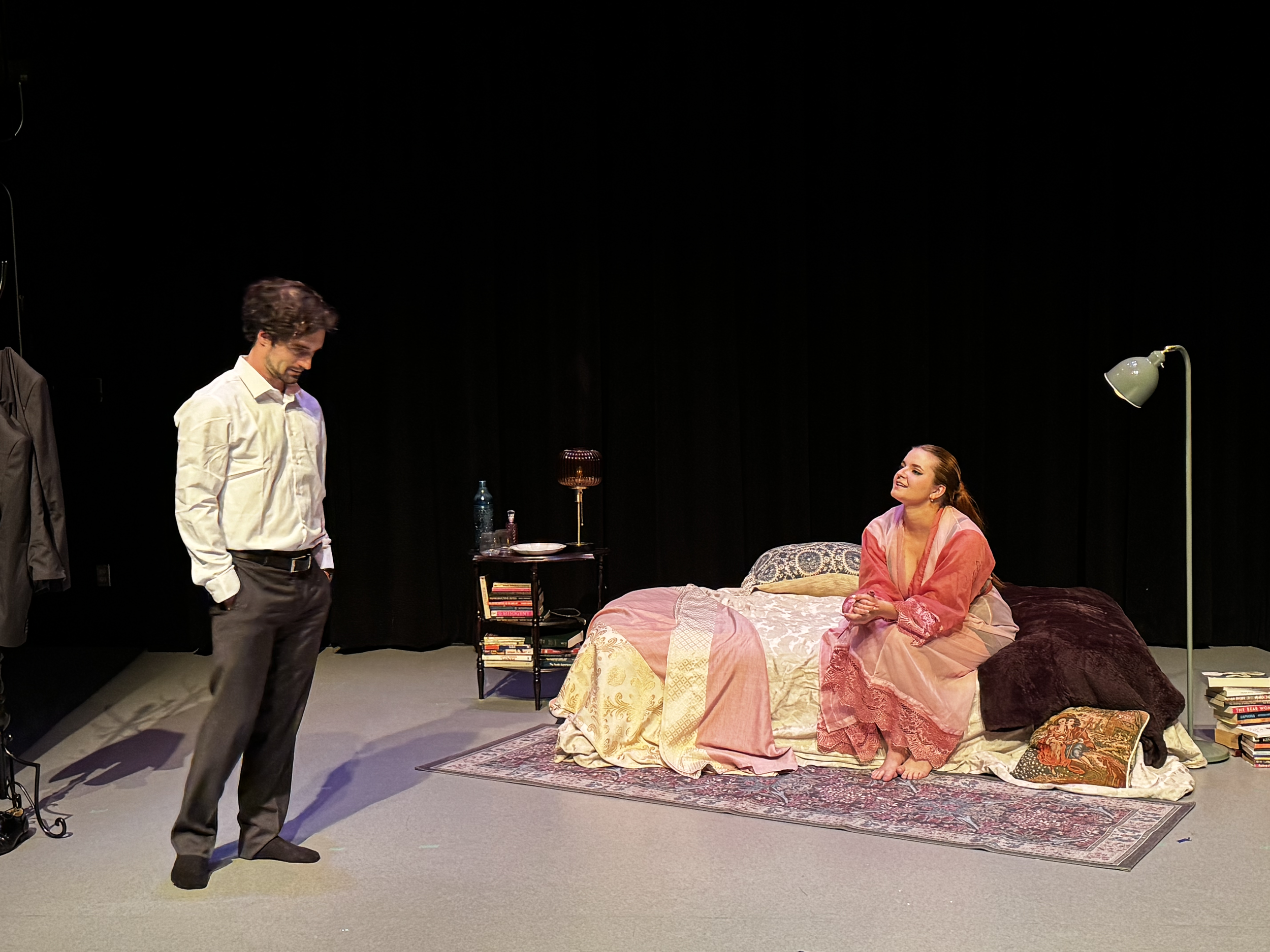
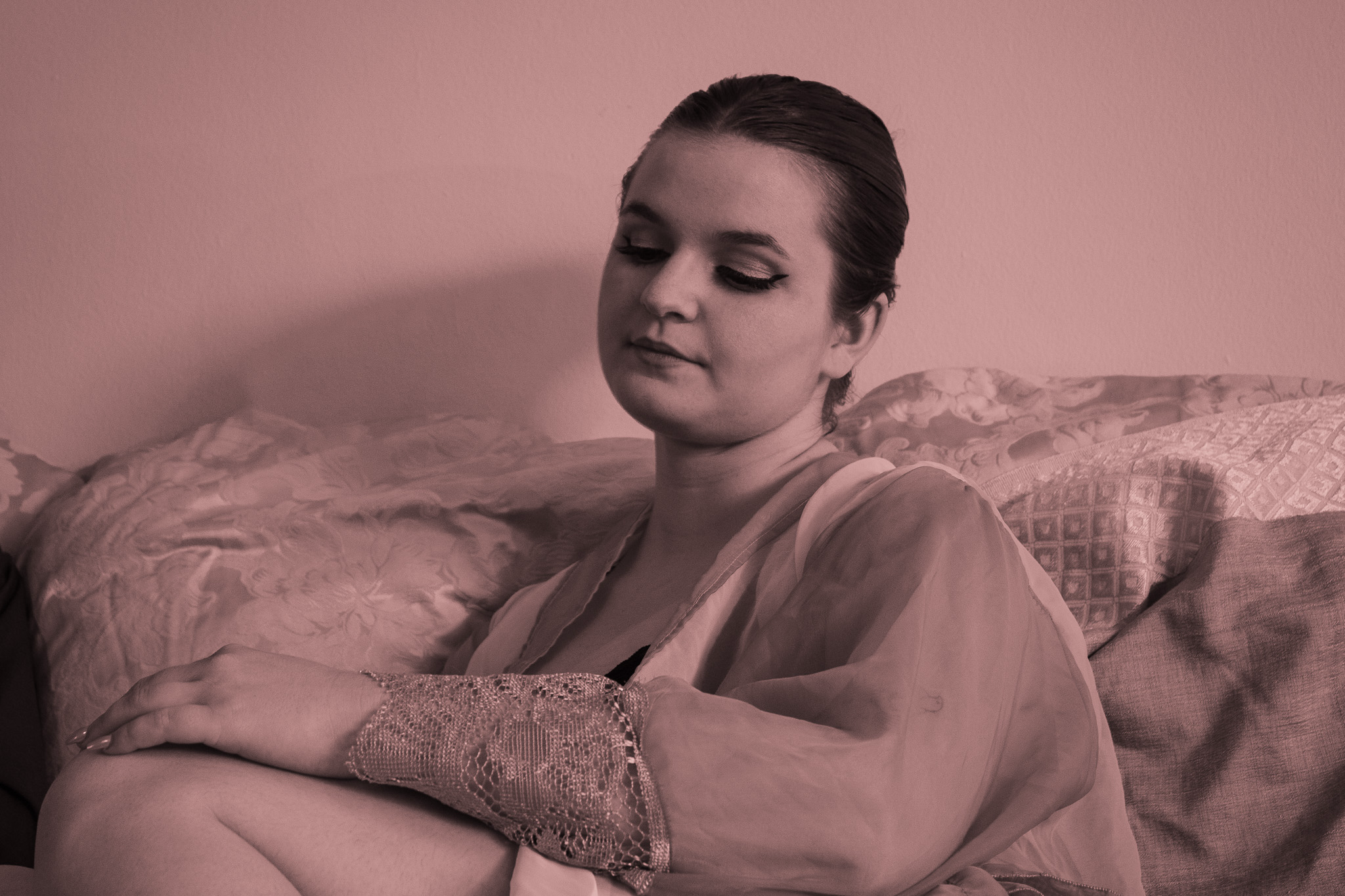
REVIEW: There is No Anger Like That of a Woman
Steel City Reviews
Playwright and actor Grace Delamere has crafted a powerful and provocative drama that effectively challenges its audience with its subject matter. It forces the audience to sit with uncomfortable realities that women face, the contradictory nature of religion and its practitioners and the power one can achieve through desire. It is easily one of the best pieces of writing and execution at this year's Fringe.
Delamere has created two characters that are relatable, surprising and strong-willed courageously brought to life by the charismatic pairing of Liam Armstrong as Adam and Delamere herself as Eve. There is intense chemistry between them the entire show that make intimate, vulnerable moments almost feel like a release. Despite the serious nature of the show’s themes, there are times when their discussions are playful and humorous too, adding to the terrific onstage allure between them.
REVIEWS: Hamilton Fringe Festival 2026
By Hunter Weaymouth, Intermission Magazine
A banker walks into a brothel and pays for an hour with the most expensive woman there. It sounds like the setup for a joke, but instead of a punchline, There is No Anger Like That of a Woman has something else in mind.
Playwright-performer Grace Delamere’s intimate two-hander spends its hour observing Eve (Delamere) and her client Adam (Liam Armstrong) circle one another in conversations about misogyny, religion, sex work, and power. The ideas themselves may not be particularly revelatory, but that almost seems beside the point. Whether the play unfolds in the present day or some more abstract space, discussions of the biblical Eve’s legacy in Christian theology or the persistence of patriarchal institutions remain relevant, and Delamere’s script approaches them with wit, conviction, and occasional welcome bursts of humour.

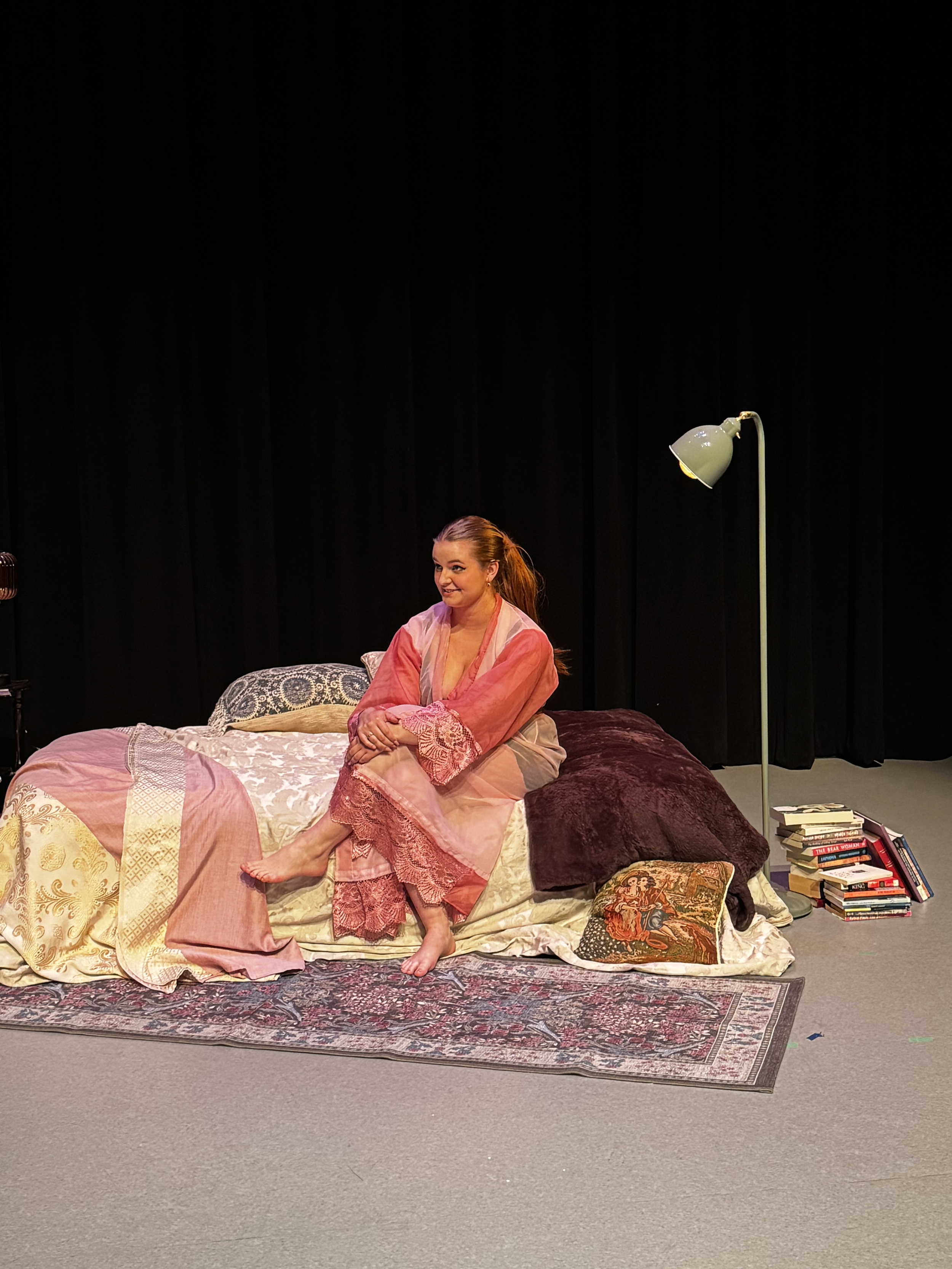
There is No Anger Like That of a Woman
Reviewed by Betsy Dee, The Vibe Hamilton
The vibe of this play is intimate, intense—and unforgettable.
In this compelling work by Grace Delamere, the audience joins two characters in the endless cycle of defeat that is prostitution. It's a demanding play: It doesn't ask questions; it reminds us that, tragically, the answers don't seem to matter.
Ms. Delamere gives us a strong portrayal of a reserved, jaded Eve (you can see how Eve got to be the most expensive girl in the house). Even she doesn't think she's a victim; she has told herself that her career is a choice she made; a decision that gives her dominion over her own body. You might even believe her vehement claims yourself, except you heard what happens before the lights come up on the scene.
Hamilton Fringe Festival 2026 Mini-Reviews
Hamilton City Magazine
It doesn’t seem that Eve is really all that angry in There is No Anger Like That of a Woman. She’s fed up, for sure, and maybe a bit resigned, but she doesn’t let her anger show. And that’s a statement on the theme of the play itself. The power imbalance between women and men means that she’s not safe to really show her rage, especially alone in a room with a strange man. Eve is a brothel's most expensive escort. She’s well-read and educated. And she doesn’t have a high opinion of men. The world is built by them and for them and Eve is tired of it. And she’s particularly fed up with the men who don’t call out the abusive and predatory behaviour of other men. “Not all men” is just not good enough. - Meredith MacLeod
‘Sharing is Caring’ dives into queer identity and friendship | Queen’s Journal
By: Cloey Aconley
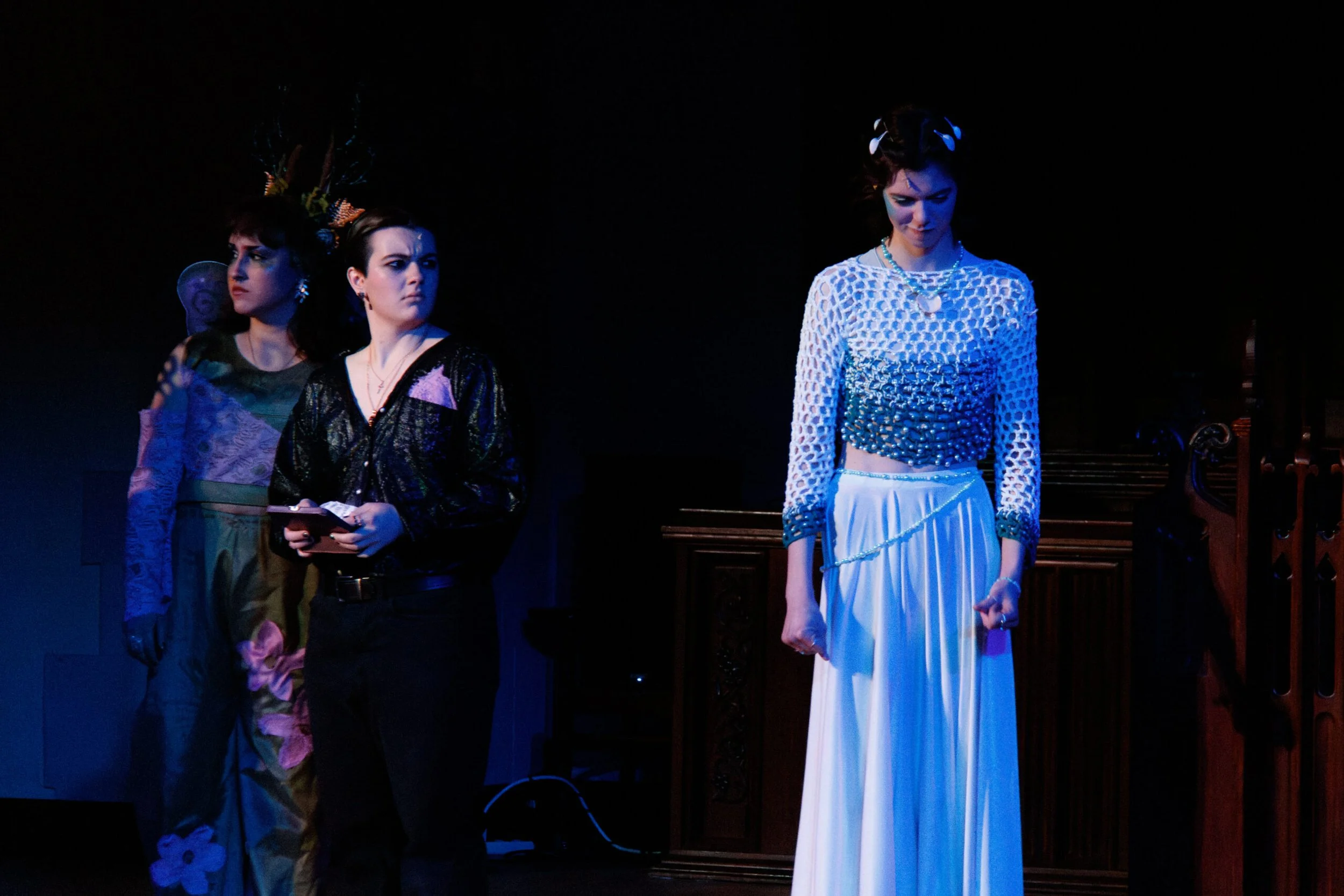
Each character deals with different challenges, including depression, addiction, domestic abuse, transphobia, as well as general loneliness and feeling like a bad friend. These dynamics are further explored as the audience learns more about the characters and their motivations, understanding the group’s dynamics on a deeper level after every confessional.
Callie, one of the main characters, played by Bas O’Brien, comes across as the most emotionally intelligent, but the audience could see them listening in during the confessions. When this is revealed, you wonder what they have left to offer the group, and if they’ll be able to forgive them.
Delamere expressed how they wanted to portray the complexity of friendship.
What Does It Take to Be A Producer? Grace Delamere Talks ‘Sharing Is Caring’ | Kingston Theatre Alliance
By: Haley Sarfeld
Sharing Is Caring, which follows a queer friend group on Hallowe’en, examines the limits of closeness in relationships. “What’s the difference between thinking you know everything about someone because you spend all your time with them, and actually knowing that person? Is there such a thing as saying too much when it comes to your closest friends, and sometimes partners or lovers?”
The choice to write a story about gender-diverse characters was a natural one. “It’s really special to me because it’s something that I’ve lived—having an almost fully queer friend group—and it’s beautiful and awesome, and also sometimes hard, because life is hard. And I’ve never seen that experience reflected onstage. And I’m not saying my experience is everyone’s, but it’s at least a little taste of what it’s like.”


Elsa McKnight Gets Experimental | Kingston Theatre Alliance
By: Haley Sarfeld
Shaped around the premise of a psychological experiment, EXPERIMENT 1a takes its audience—or participants, as McKnight calls them—on a journey through the Spire. When asked for details about the performance, she’s evasive. “The whole thing is a bit on the down low,” says McKnight. “You don’t know what the experiment’s really going to entail when you walk into the space… but it involves being in a space and taking part in some fun activities and games.” Pressed further, she offers three words to describe the show’s vibes: “Confusion, playfulness, and competition.”
Of the Sea Productions presents Experiment 1a | YourTv Kingston
An interview with Grace Delamere and Sam MacLeod
Little Red Riding Hood Bares her Teeth in ‘The Cape as Red as Blood’ | Kingston Theatre Alliance
By: Alyce Soulodre
“This play shows that Red Riding Hood, and even remakes of Red Riding Hood, aren’t blasé or overdone. There’s still rich content to work out from the tale, especially with the added environmental message in this case. In particular, younger generations (hey, Gen Z) can adapt the story in innovative ways (with really catchy music), while using folk inspiration and traditional devices like puppetry. The show has overall feel-good vibes, and more than that, its innovation made me feel hopeful about the future in general (not an easy feat!).”


TK Fringe brings strong mélange of shows to Kingston | Intermission
By: Haley Sarfeld
“From a generation of students who cut their teeth amid a global pandemic and looming environmental catastrophe, The Cape As Red As Blood is both an outlet for despair and a call to rise from the ashes and take action for a world we love. I admire the show’s ability to show the deep rage that comes with being a woman in a misogynistic society without depicting violence against women outright — a deeply Gen Z sensibility, and one that makes it feel safe to sit in the shadows and open up to the story. Creepy, satisfyingly dense harmonies and energetic performances make the show worth attending a second time, and I truly can’t wait to watch it develop further in the coming years. If, from time to time, the team bites off more than they can chew, it’s a voracious, mouth-watering bite that leaves me eager to see them take the next one.”
Review: TK Fringe breaks fourth wall across the board | Kingston This Week
By: Skylar Soroka
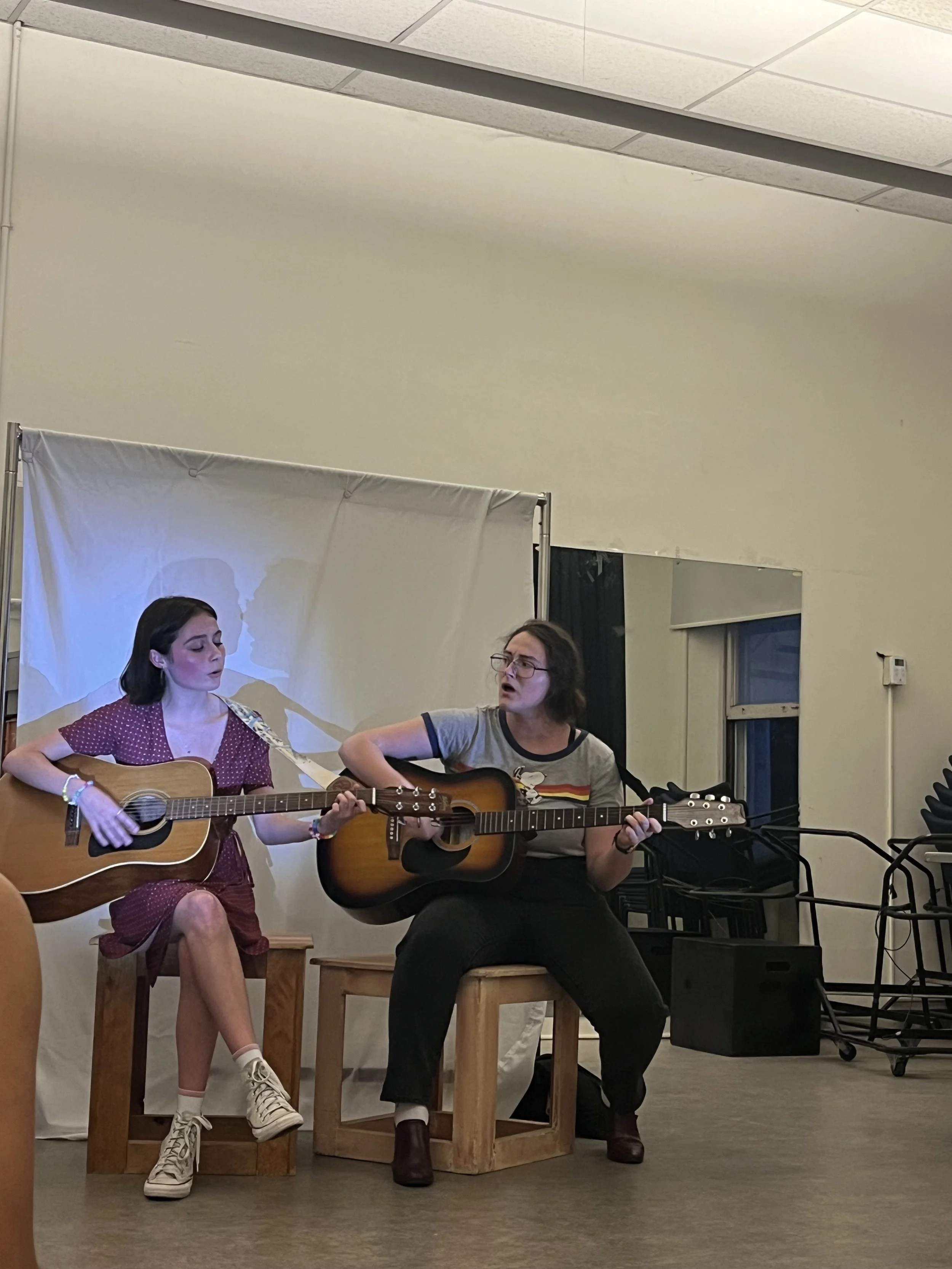
“The highlight of the show for me was the blank white sheet hung centre-stage, which served as a point of the plot to always revert my eyes back to. It was also a canvas for shadow depictions of the story, bringing scenes to life, such as Little Red venturing into the woods or Crow marking their portrayal as the Big Bad Wolf.
Another key element was the symbolism of the wind, or nature, guiding the characters’ destinies. The wind pushes Little Red away from home and towards the village, emphasizing the theme of environmental preservation where tension of opposing views on deforestation take place. The difference between Crow, engulfed in a world of darkness, and Phoenix, painted with child-like wonder and naivety, champion a stark contrast adding depth to this classic folktale.”

‘Violets Bloom in April and Marigolds in Autumn’ reminded me of the times I sobbed on my bedroom floor | Queen’s Journal
The play incorporates LGBTQ+ love stories in a real and raw manner
By: Paige La Fraugh
“I walked into this show not knowing what to expect. I walked out with tears in my eyes and the cathartic feeling of getting to see myself represented on stage as a non-binary student.”
“Mevis delivered a performance that reminded me of nights spent sobbing on my bedroom floor and uprooted memories of the first time I fell in love with a woman and didn’t know how to act because I didn’t understand who I was.
Violets is a show that reflects real struggles—not what society thinks struggle looks like for Gen Z.
The acting in Violets was arguably some of the best acting I’ve seen at Queen’s. The discipline, mannerisms, and vulnerability of each character made it feel like these were real people on stage and not characters curated from Delamere’s mind.”